
Restore the vibrant, clear vision you remember. Dr. Carola Okogbaa offers advanced cataract surgery with modern surgical technique and premium lens options designed around your unique vision goals.
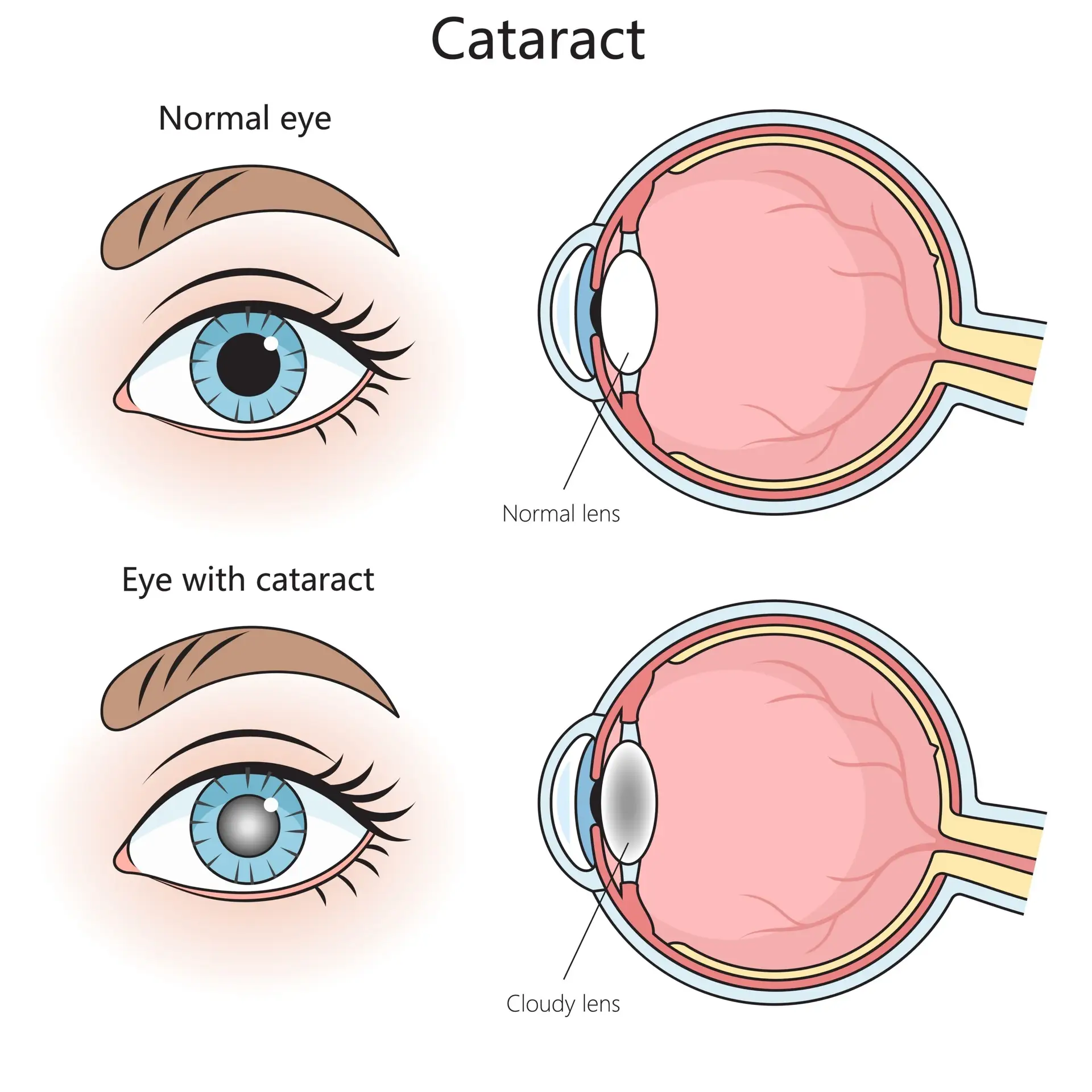
A cataract is a clouding of the eye’s natural lens, which sits just behind the iris. Over time, the lens hardens and becomes less transparent, blocking light from reaching the retina clearly. The result is gradually blurred, dim, or yellowed vision.
Cataracts are one of the most common causes of vision loss in adults over 60, and one of the most treatable. Modern cataract surgery is among the safest and most successful procedures in all of medicine.
SEE THE DIFFERENCE
Explore how different intraocular lens options may affect your vision before and after cataract surgery, powered by Alcon's Smart Educator vision guide.
RECOGNIZE THE SIGNS
Cataracts develop gradually, so the signs are easy to miss at first. If any of these sound familiar, it may be time for an eye exam.
Vision that looks hazy, dim, or less sharp than before.
Especially difficulty with oncoming headlights and glare.
Bright light and halos around lights become bothersome.
Colors may appear washed out, yellowed, or less vivid.
Your eyeglass prescription keeps needing adjustment.
Reading is hard even with reading glasses on.
At Louisiana Center for Eyes, Dr. Okogbaa’s modern approach to cataract surgery delivers antibiotic medication directly into the eye during the procedure, so you’ll need far fewer drops at home — just a short course of steroid and anti-inflammatory drops to protect your vision and support healing. This simplified regimen means an easier recovery, less risk of missed doses, and a smoother overall experience.
Your first visit includes a thorough eye exam, advanced measurements of your eye, and a personal conversation about your vision goals, hobbies, and lifestyle. We use this to recommend the lens that’s right for you.
Our surgical coordinator walks you through the entire process, including your lens options, costs, financing if needed, and step-by-step preparation for surgery day.
Cataract surgery is an outpatient procedure performed at Regional Eye Surgery Center. The procedure itself takes about 15 to 20 minutes per eye. You’ll be comfortable, gently sedated, and home the same day.
Most patients return to normal activities within 24 to 48 hours. Vision improvement is often noticeable within days. We schedule follow-up visits to ensure healing and optimal results.
Enjoy the clarity, color, and confidence that come with restored vision, with our continued support for the long term.
If your cataracts are interfering with daily activities like driving, reading, or recognizing faces, it may be time to consider surgery. The best way to know for sure is a comprehensive evaluation with Dr. Okogbaa.
No. The procedure is performed with numbing eye drops and gentle sedation. Most patients report no pain, only mild pressure during the brief procedure.
The surgical procedure itself takes about 15 to 20 minutes per eye. Total time at the surgery center, including preparation and recovery, is usually 2 to 3 hours.
This depends on the type of lens you choose. Standard monofocal lenses correct vision at one distance, most patients still need reading glasses. Premium lens options like PanOptix and Vivity can significantly reduce or eliminate the need for glasses.
Many patients notice improved vision within 24 to 48 hours. Final vision results stabilize over the following weeks.
For safety reasons, we perform cataract surgery on one eye at a time, typically 1 to 2 weeks apart.
Yes, standard cataract surgery is covered by Medicare and most major insurance plans. Premium lens upgrades are out-of-pocket but financing is available.
Lens implants are designed to last a lifetime and do not need to be replaced.
Schedule your comprehensive cataract evaluation with Dr. Okogbaa. We'll answer your questions, evaluate your eyes, and help you decide the best path forward.